How Much Does Liposuction Cost in Korea? A 2026 Guide
How Much Does Liposuction Cost in Korea? A 2026 Guide
Liposuction in Korea generally runs lower than in the US or Western Europe for comparable work, but the number you're quoted depends on more than the country you're in. Treatment area, how much fat is being removed, the type of anesthesia used, and whether aftercare is bundled in will all move the figure — sometimes by a wide margin.
If you're comparing clinics, the useful question isn't "what's the cheapest?" It's "what's actually included in this number?" Below is a breakdown of what goes into a liposuction quote in Korea, and the specific things worth asking about before you commit.
What determines the price?
Four factors do most of the work.
Treatment area. A single area — say, the inner thighs — sits at the lower end. Full-body work, or a combination like abdomen plus flanks plus back, moves up considerably. Areas aren't priced identically either: the abdomen and thighs typically involve more volume than arms or the knee area.
Fat volume. Two patients can request the same area and receive very different quotes, because the amount of fat being removed differs. This is why any clinic quoting you a firm price before an in-person assessment is guessing.
Anesthesia. Local anesthesia costs less than general anesthesia or sedation. The choice isn't purely financial — it depends on the scope of surgery and your medical history — but it does affect the total.
Aftercare. This is where quotes diverge the most. Some clinics include compression garments, swelling management sessions, and follow-up visits in the surgical fee. Others price them separately, which means the headline number you compared online wasn't comparable at all.
Why we don't publish a fixed price list
We're often asked why there isn't a simple menu of prices on our site. The honest answer is that a fixed number would be misleading.
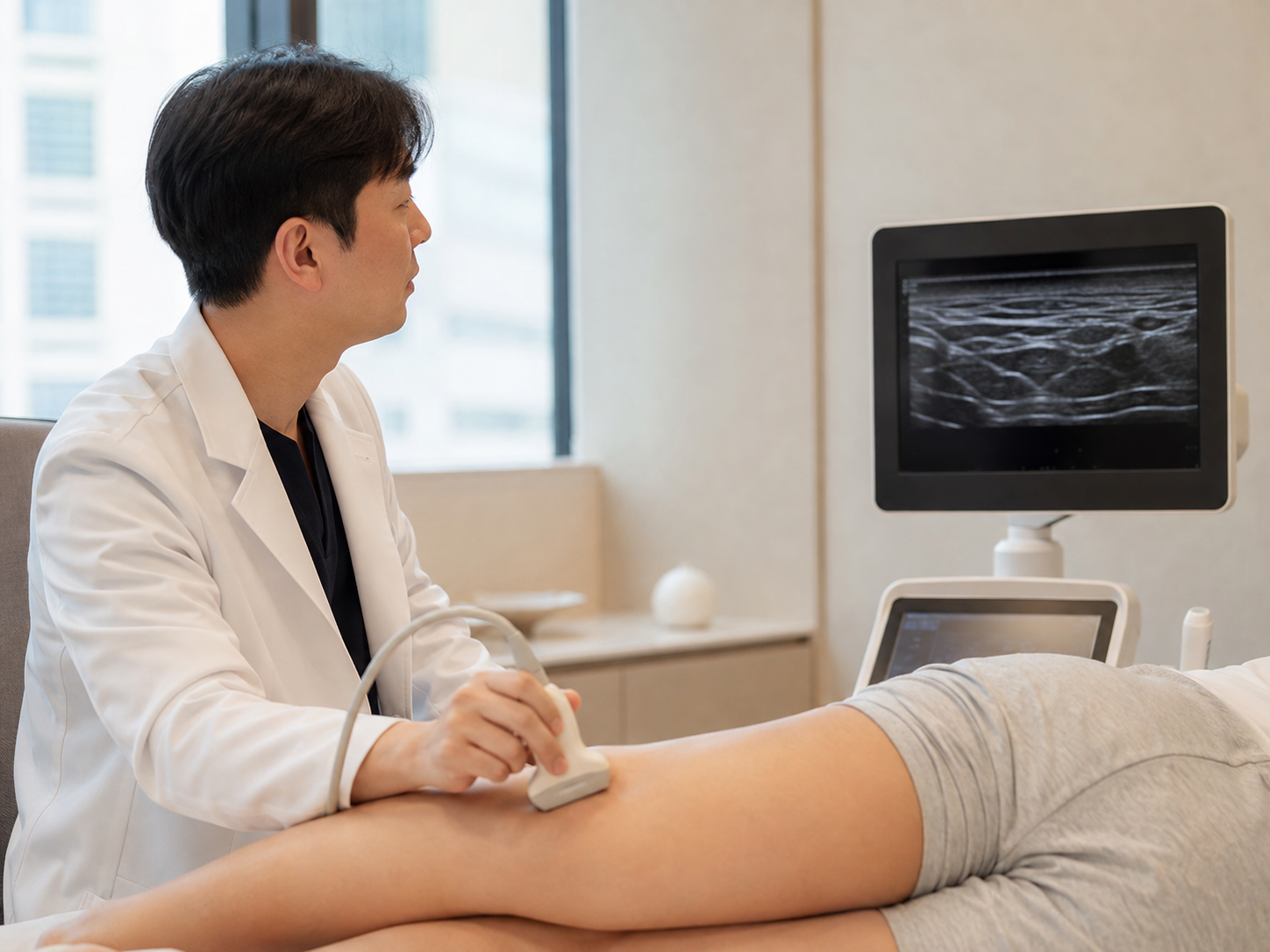
At Pose Clinic, consultations begin with an ultrasound measurement of the fat layer and a body composition analysis. That's not a formality — it tells us how much fat is actually there, how it's distributed, and whether surgery is the right approach at all. Some patients come in expecting a large-volume procedure and turn out to have less subcutaneous fat than they assumed. Others have muscle where they assumed fat. Quoting a price before that assessment would mean quoting for a procedure we haven't yet confirmed is appropriate.

What to ask before you book
Whichever clinic you're considering, four questions will tell you most of what you need to know.
First, how is fat volume measured? Visual assessment and a pinch test alone leave a lot to interpretation. Ask whether ultrasound or body composition analysis is used.
Second, does the surgeon who consults also operate? In some clinics, a coordinator handles the consultation and you meet the operating surgeon on the day of surgery. Ask directly.
Third, how are incision sites managed? Liposuction involves incisions, small as they are. Ask whether there's a defined scar care protocol or just general advice.
Fourth, is aftercare included or billed separately? Recovery affects the final result. Find out what's covered before you compare totals.
For patients traveling from abroad
If you're coming to Korea specifically for surgery, a few practical points are worth planning around.
Most patients should plan for around 7 to 10 days in Korea, which allows for consultation, surgery, initial recovery, and at least one follow-up before flying. Longer stays are advisable for larger-volume procedures.
Air travel too soon after liposuction isn't recommended. Your surgeon will advise on timing based on your procedure and recovery.
Ask how the clinic handles remote follow-up once you've returned home. Recovery doesn't end when you leave the country.
Finally, confirm in advance whether consultation and post-operative instructions are available in a language you're comfortable with.
A note on comparing quotes
Price differences between clinics often come down to what's bundled rather than the surgery itself. A lower quote that excludes compression garments, swelling management, and follow-up visits can end up costing more once those are added — and a higher quote that includes them may be the better value.
The more useful comparison is what happens around the surgery: how the assessment is done, who performs the procedure, and what recovery support you receive. Those factors have more bearing on your result than a difference of a few hundred dollars in the surgical fee.
Frequently asked questions
Is liposuction in Korea cheaper than in the US?
Generally, yes, for comparable procedures — though the gap varies by area and scope. Factor in travel and accommodation when comparing totals.
Can I get a quote before traveling?
We can give you a range based on photos and a description of what you're looking for, but the final figure is confirmed after an in-person assessment. Any clinic that commits to an exact price sight unseen should prompt a follow-up question.
Does the price include aftercare?
At Pose Clinic, post-operative care is part of the treatment plan discussed at consultation, so you'll know what's covered before proceeding. Policies differ between clinics, so ask this specifically wherever you're comparing.
What if I'm not a good candidate?
We'll tell you. If the assessment shows that surgery won't produce the result you're after — or that this isn't the right time — we say so rather than proceeding. That conversation is part of the consultation.
Pose Clinic — Liposuction and Body Contouring, Seoul
848 Nonhyeon-ro, Gangnam-gu, Seoul (Apgujeong Station, Exit 3)
Director: Dr. Se-il Hwang · Over 20 years in liposuction and body contouring
Consultations available in English, Chinese, and Japanese.
Individual results vary depending on physical condition and treatment plan. All surgical procedures carry potential risks and side effects. Please consult with a qualified medical professional before making a decision.